

Greater Phoenix
Help families find your home.
Websites, professional photography, and design built specifically for small assisted living homes. Residents typically stay close to two years, so one new move-in is worth many times what these services cost.
Websites
A five-page site families can read on a phone, with a form that reaches you.
Photography
Your home, photographed properly, with resident consent handled first.
Brand and print
A logo, a brochure, and the flyers you hand out on a tour.
Families search before they call.
By the time somebody phones your home, they have already looked you up, and so has the placement agent who sent them. What they find is usually a Facebook page, a listing on somebody else's directory, or nothing at all. That is the gap this work closes.
A site that answers the real questions
What it costs, what level of care you take, whether there is a room open, and how to reach you. Readable on a phone, because that is where it will be read.
Photographs of the actual home
Not stock images of a lobby you do not have. A family deciding where to move their mother wants to see the room, the kitchen, and the yard.
Found on the map
A Google Business Profile set up properly is how "assisted living near me" finds you at all. Most small homes have never claimed theirs.
Two ways to start
Most homes take a package. It is the same work, priced lower than buying the pieces one at a time.
Get Found
$895 one-time
Save $180
What a home needs to turn up in a search: a website, a name and look people remember, and a Google listing that sends families to it.
- Website build
- Logo & brand kit
- Google Business Profile setup
Best value
Full Launch
$1,295 one-time
Save $305
Everything above, plus professional photographs of your home and the print material for tours, placement agents, and the front door.
- Everything in Get Found, plus
- Professional home photos
- Tri-fold brochure
- Flyer
Recent projects
Sites we built, live and linked so you can look at them yourself.
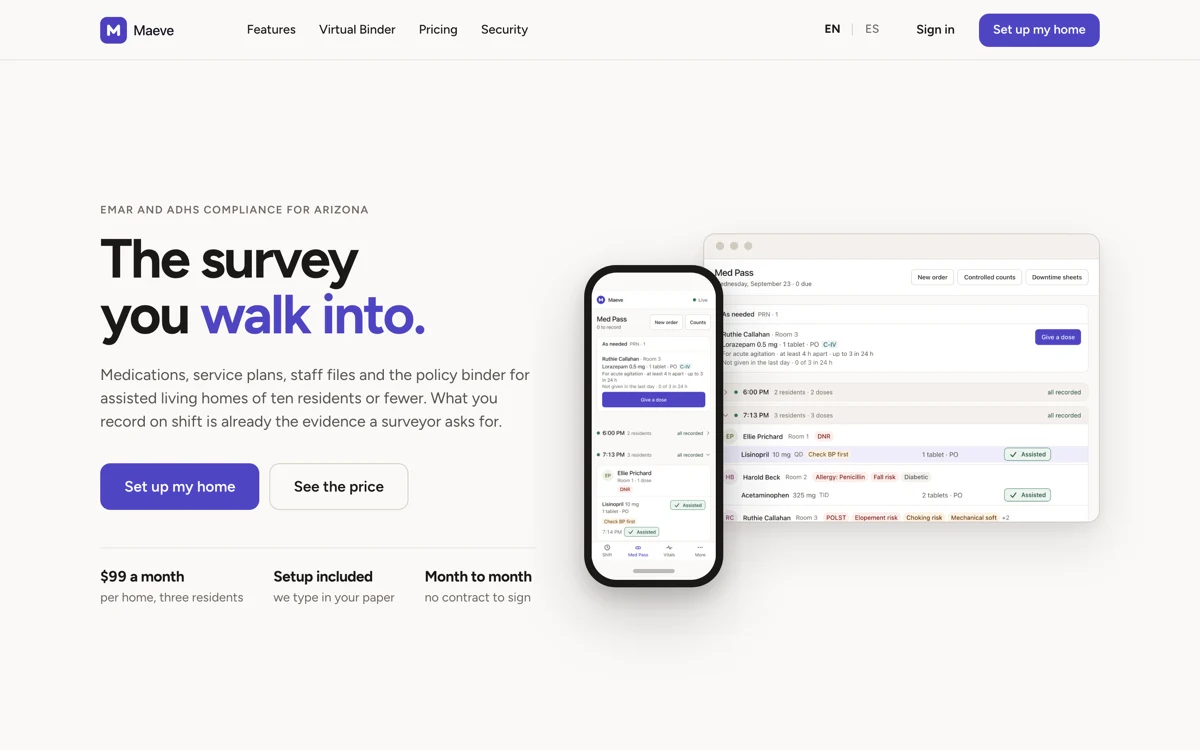
Maeve
QuinTek
The site for Maeve, our own eMAR and compliance platform, in English and Spanish, with real screenshots of the app and a live price calculator.
maeve.care(Visit)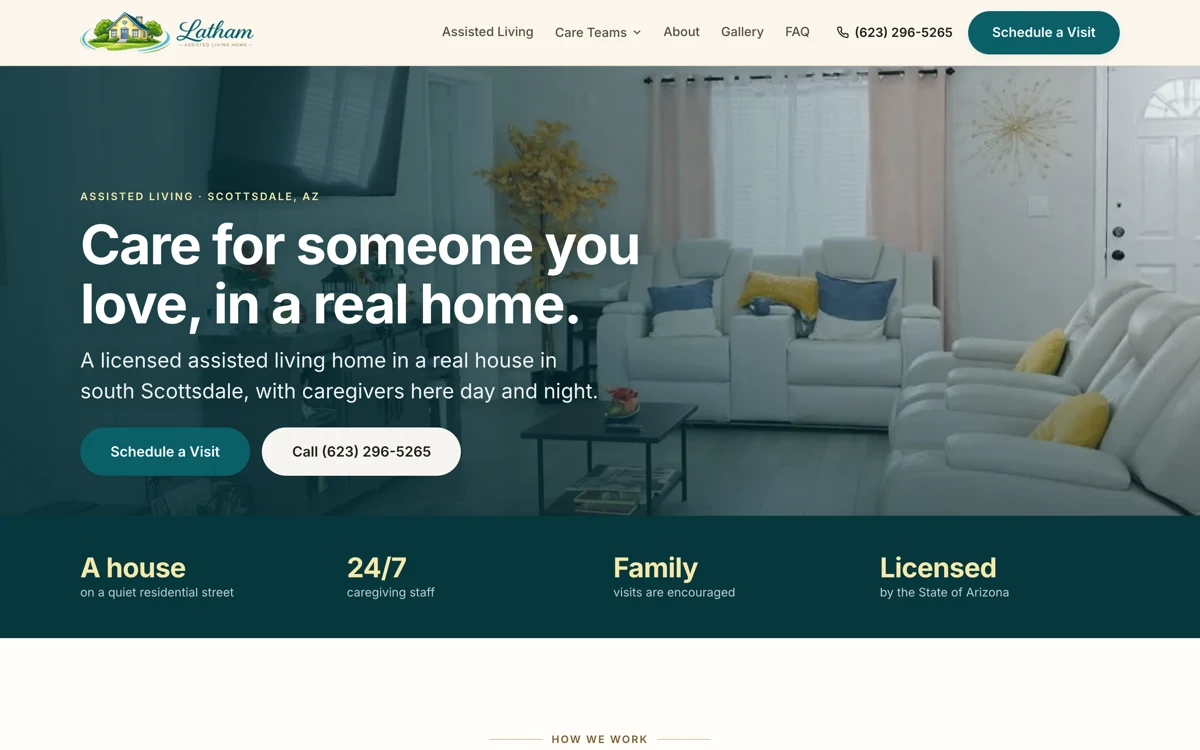
Latham Assisted Living Home
Scottsdale, Arizona
A ten-bed assisted living home that had no website at all. Five pages, a tour request form, and photographs of the actual rooms.
lathamassistedliving.com(Visit)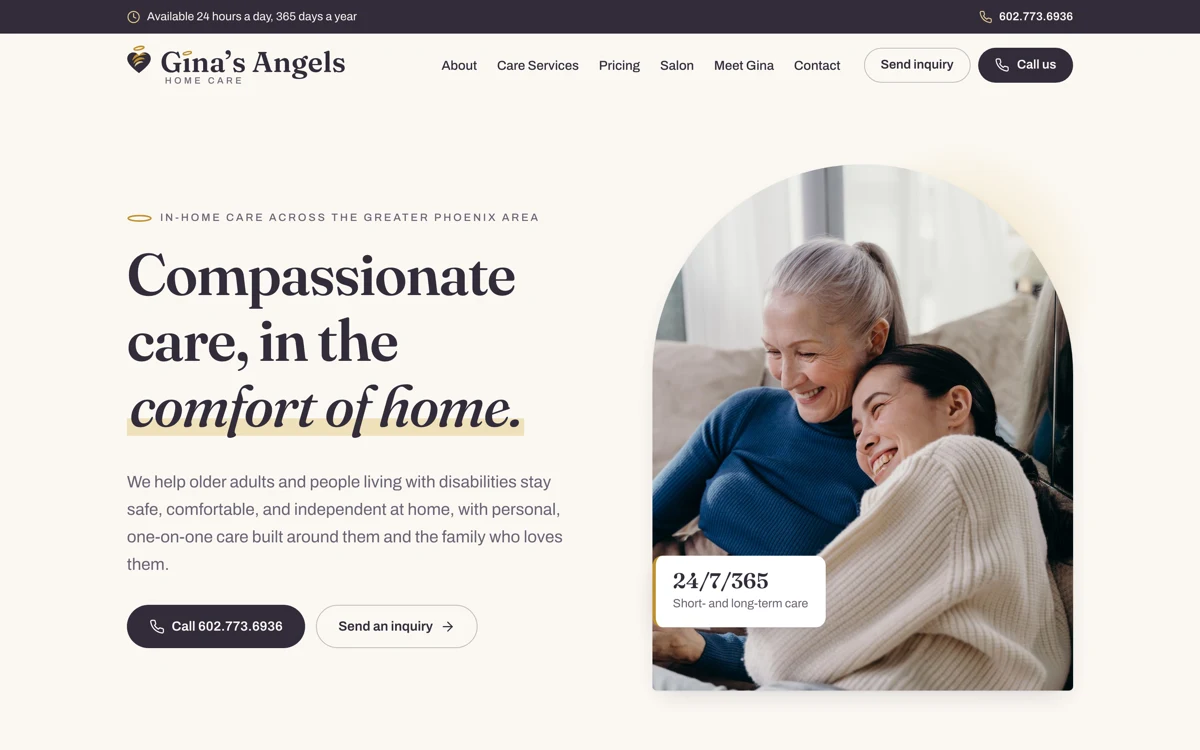
Gina's Angels Home Care
Greater Phoenix, Arizona
A home care agency working across the Phoenix area. A site that explains the services and a form that reaches Gina directly.
ginashomecare.com(Visit)
Also from QuinTek
Maeve
We also build software for care homes. Maeve is an eMAR and compliance platform for Arizona assisted living homes, built so that an ADHS survey is something you walk into rather than prepare for.
Maeve customers save 15% on all one-time services.
- Medication administrationEvery dose ties back to an active practitioner order, including over-the-counter medication. Administration and assistance with self-administration are handled as the separate things the rules say they are.
- Records that hold upNothing is overwritten and nothing is made illegible. A correction is a new entry that points at the original, and every signature carries the account, the device, and the server's own clock.
- Service plans on a clockInitial plans, reviews at the interval the resident's care level requires, and updates after a significant change. Maeve tracks the dates so you are not keeping them in a calendar.
Tell us about your home.
Send a short note and we will reply within one business day with a price and a timeline. No sales call, and no obligation.